
There's something utterly enchanting about a Basque Cheesecake that's deeply caramelized on the outside yet irresistibly creamy inside. This Basque Cheesecake Recipe turns out just that—a perfectly burnt top with a luscious center that practically melts in your mouth. Trust me, once you try it, this dessert will become a new favorite to impress family and friends alike.

Jump to:
Why You'll Love This Recipe
This Basque Cheesecake Recipe is honestly one of the easiest and most rewarding desserts I've ever made. It doesn’t just deliver on flavor but also on that rustic, imperfect look that makes it whimsically charming—no need to stress about making it perfect, it’s meant to look unique and beautiful.
- Quick and simple: The ingredients are straightforward, and the process is easy enough for even beginner bakers. No complicated water baths or cheesecake tricks involved.
- Deliciously creamy texture: You get a silky, rich, custard-like center that’s light but decadent all at once.
- Beautiful caramelized crust: That signature burnt top adds a smoky, bittersweet note making every bite interesting.
- Versatile dessert: Serve it plain, or dress it up with fresh fruits or sauces—you’re in control of how fancy you want to get!

Ingredients & Why They Work
Every ingredient in this Basque Cheesecake Recipe has an important role to play to achieve that creamy texture and that signature rustic crust. Using room temperature dairy and eggs really helps the batter blend smoothly and prevents lumps, so keep that in mind when shopping and prepping.

- Cream Cheese: Full-fat and room temperature cream cheese is key—it gives the cheesecake richness and that dense creamy body.
- Granulated Sugar: Sweetens the cheesecake while helping in the caramelization process of the top crust.
- Eggs: Using large, room temperature eggs provides structure and moisture without making the cheesecake rubbery.
- Heavy Cream: Adds silkiness and smooth mouthfeel; I especially love using local double cream if I can find it.
- Vanilla Extract: A touch of vanilla enriches the flavor without overpowering the creamy cheese.
- Salt: Just a pinch to balance and enhance sweetness.
- All-Purpose Flour: A small amount provides just enough stability without making the texture cakey.
Make It Your Way
I love how forgiving this Basque Cheesecake Recipe is—it practically invites you to put your own spin on it. Whether you like it a bit sweeter or add a splash of espresso for depth, it's easy to adjust and truly make it yours.
- Variation: Sometimes I add a teaspoon of espresso powder to the batter for a subtle coffee note, which pairs beautifully with the caramelized top.
- Sweetness level: I sometimes reduce the sugar slightly when serving with a tart berry compote to balance the flavors.
- Dairy swaps: If you want a lighter option, swapping some cream cheese for mascarpone can bring a softer texture, though the classic is still my favorite.
- Flavor twists: A hint of lemon zest or a dash of cinnamon added to the batter makes a great seasonal twist.
Step-by-Step: How I Make Basque Cheesecake Recipe
Step 1: Prepare Your Pan Like a Pro
The easiest way to ensure your cheesecake has that rustic look and doesn't stick is to line your 9 or 10-inch springform pan with a double layer of parchment paper, crisscrossed. I found spritzing the paper lightly with water, then scrunching and smoothing it out helps it hug the pan snugly. Let those edges stand 2 inches above the rim so the batter can rise freely without spilling.
Step 2: Whip Cream Cheese Until Ultra Smooth
Using a stand mixer or a hand whisk, whip the room temperature cream cheese for about 2 minutes. This little step makes a huge texture difference — you want it silky smooth to avoid lumps in your final cheesecake. Scrape down the bowl to keep everything well combined.
Step 3: Add Sugar and Eggs Gradually
Pour the sugar slowly into the cream cheese while mixing on medium speed until the mix is glossy and smooth. Then add your eggs one by one on low speed, mixing just enough to incorporate each fully before adding the next. Slow and steady is the way to prevent air bubbles and maintain that creamy texture.
Step 4: Fold in Cream, Vanilla, Salt, and Flour
With the mixer still on low, add the heavy cream, vanilla extract, and salt until fully mixed. Finally, sift your flour over the bowl and mix just about 20 seconds to evenly distribute it—too much mixing can toughen your cheesecake, so err on the side of gentle here.
Step 5: Bake and Let Nature Do Its Thing
Pour your batter into the prepared pan, place it on a rimmed baking sheet, and bake at 425°F for 65 minutes. You'll see it puff up impressively then gently sink as it cools—that’s perfectly normal. The top should be a beautiful golden brown with some darker burnt spots. The center will still wiggle a bit, and that’s exactly how you want it. Let the cheesecake cool to room temperature before chilling it overnight for the best texture.
Top Tip
After making this Basque Cheesecake Recipe multiple times, I've learned a few tips that make all the difference between good and exceptional.
- Room Temperature Everything: Make sure your cream cheese, eggs, and cream are all at room temperature to avoid lumps and to blend smoothly.
- Don't Overmix: Slow your mixing speed after adding eggs and flour—overwhipping can trap too many air bubbles and ruin that creamy, dense texture.
- Parchment Prep: Wetting and scrunching the parchment paper helps it stick to your springform pan nicely and prevents it from collapsing during the pour.
- Leave It To Chill: Patience pays off—chilling the cheesecake overnight lets the center set perfectly and the flavors meld beautifully.
How to Serve Basque Cheesecake Recipe

Garnishes
I usually serve mine simply because the caramelized top is a flavor star on its own. But if I want to jazz it up, a dollop of fresh whipped cream or a drizzle of honey works wonderfully. During berry season, a vibrant homemade berry compote adds just the right touch of tartness to balance the richness.
Side Dishes
This cheesecake pairs beautifully with light accompaniments like fresh fruit slices or a simple espresso or black coffee. For festive occasions, I like to offer almond biscotti or shortbread cookies on the side to complement the creamy dessert without overpowering it.
Creative Ways to Present
When I’m serving this cheesecake at a dinner party, I love lifting it out of the pan using the parchment edges and placing it on a pretty platter to highlight its rustic edges. Sometimes, I sprinkle a little flaky sea salt on top to contrast the sweetness and enhance that burnt flavor. For a special twist, try cutting it into small squares and serving with a side of fruit coulis as mini dessert bites.
Make Ahead and Storage
Storing Leftovers
Once cooled and chilled, I keep the Basque cheesecake wrapped loosely with plastic wrap or inside an airtight container in the fridge. It stays fresh and creamy for up to a week, making it a great make-ahead treat.
Freezing
I’ve frozen this cheesecake successfully without compromising texture. Just chill it fully, wrap tightly in plastic wrap and then aluminum foil to avoid freezer burn. When you’re ready, thaw in the fridge overnight for best results.
Reheating
I prefer eating Basque cheesecake chilled or at room temperature, so reheating isn’t usually necessary. But if you want it a bit warmer, just let it sit at room temp for about an hour. Avoid microwaving to maintain its creamy texture and avoid sweating.
Frequently Asked Questions:
Basque cheesecake is unique because it’s baked at a high temperature to create a deeply caramelized, almost burnt top and edges, with a creamy, custard-like center. It doesn’t have a crust like traditional cheesecakes, which adds to its rustic charm and flavor profile.
For the best texture and flavor, I recommend using full-fat cream cheese. Low-fat versions can make the cheesecake less creamy and might affect how it bakes, resulting in a less smooth texture.
The center of the Basque cheesecake will be jiggly when it comes out of the oven because it sets as it cools and chills. This is intentional and helps achieve the perfect creamy texture. Avoid overbaking, which can dry it out.
For clean slices, remove the cheesecake from the refrigerator about 1-2 hours before serving to let it come to room temperature. Then, heat a large knife under hot water, wipe it dry, and slice in smooth motions between each cut. This stops the cream cheese from sticking to your knife.
Final Thoughts
Honestly, this Basque Cheesecake Recipe has become my go-to when I want a dessert that's both show-stopping and surprisingly simple. Its imperfect, rustic top always earns compliments, and the creamy center makes everyone ask for seconds. I’m excited for you to make it, share it, and enjoy all its comforting, creamy goodness just like I do.
Print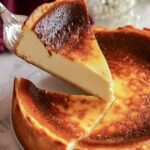
Basque Cheesecake Recipe
- Prep Time: 15 minutes
- Cook Time: 1 hour
- Total Time: 11 hours 15 minutes
- Yield: 12 servings
- Category: Dessert
- Method: Baking
- Cuisine: Spanish
Description
A rich and creamy Basque Cheesecake with a caramelized top and silky interior, perfect for dessert lovers seeking a rustic yet impressive treat.
Ingredients
Cheesecake Batter
- 32 ounces cream cheese, room temperature and full-fat only
- 1½ cups granulated sugar
- 5 large eggs, room temperature
- 1½ cups heavy cream, room temperature
- 1 tablespoon vanilla extract
- 1 teaspoon salt
- ⅓ cup all-purpose flour, sifted
Instructions
- Preheat and Prepare Pan. Preheat the oven to 425°F and line a 9 or 10-inch springform pan with a criss-crossed double layer of parchment paper. Wet, scrunch, and dry the parchment paper to make it easier to work with, allowing it to stick up about 2 inches above the pan.
- Whip Cream Cheese. In a large bowl or stand mixer fitted with a whisk attachment, whip the cream cheese for 2 minutes until smooth.
- Add Sugar. Add the granulated sugar on medium speed and whip for about 2 minutes until fully incorporated and smooth, scraping down the sides to remove lumps.
- Incorporate Eggs. Add the eggs one at a time on low speed, ensuring only a little yellow remains from the previous egg before adding the next to avoid overmixing.
- Add Cream, Vanilla, and Salt. With the mixer on low, add heavy cream, vanilla extract, and salt, mixing until fully combined.
- Mix in Flour. Sift the flour into the batter and mix for about 20 seconds on low speed until just incorporated.
- Pour Batter into Pan. Pour the cheesecake batter into the prepared springform pan, smoothing the top gently.
- Bake the Cheesecake. Place the pan on a rimmed baking sheet on the middle oven rack and bake for 65 minutes until the top is golden brown and the center remains jiggly. It will puff during baking and sink as it cools.
- Cool the Cheesecake. Transfer the cheesecake in the pan to a wire rack and allow it to cool to room temperature completely.
- Chill Overnight. Refrigerate the cheesecake in the pan for at least 8 hours or overnight to fully set.
- Serve. Remove from the refrigerator 1 to 2 hours before serving for best texture. Use parchment edges to lift the cheesecake off the pan base, slice with a hot knife for clean pieces, and serve plain or with your favorite topping.
Notes
- Use farm fresh double cream if available for an even richer flavor.
- Do not remove the cheesecake from the pan until it has completely cooled to prevent cracking.
- Serve the cheesecake at room temperature for the best texture and flavor.
- Store in the refrigerator for up to 1 week, or freeze wrapped tightly for up to 3 months.
- Mix ingredients slowly to avoid incorporating excess air and maintain a silky texture.
- The recipe can be adjusted to taste by increasing sugar to 2 cups or reducing to 1¼ cups.
- This cheesecake intentionally has a rustic and imperfect look but is impressively delicious.
Nutrition
- Serving Size: 1 slice
- Calories: 450 kcal
- Sugar: 30 g
- Sodium: 250 mg
- Fat: 35 g
- Saturated Fat: 22 g
- Unsaturated Fat: 10 g
- Trans Fat: 0 g
- Carbohydrates: 28 g
- Fiber: 0 g
- Protein: 7 g
- Cholesterol: 120 mg


Leave a Reply