
There's something incredibly comforting about the rich, nutty flavors of sesame paired with the bright zing of ginger in a simple noodle dish. This Hibachi Noodles with Sesame and Ginger Recipe delivers that perfect harmony with minimal fuss, making it a go-to for a quick yet impressive meal you’ll love sharing with friends or family.

Jump to:
- Why You'll Love This Recipe
- Ingredients & Why They Work
- Make It Your Way
- Step-by-Step: How I Make Hibachi Noodles with Sesame and Ginger Recipe
- Top Tip
- How to Serve Hibachi Noodles with Sesame and Ginger Recipe
- Make Ahead and Storage
- Frequently Asked Questions:
- Final Thoughts
- Hibachi Noodles with Sesame and Ginger Recipe
Why You'll Love This Recipe
This Hibachi Noodles with Sesame and Ginger Recipe holds a special spot in my kitchen for how quickly it comes together without sacrificing flavor. It’s the kind of dish that feels fancy but is super approachable, perfect for weeknights or casual gatherings.
- Fast and Flavorful: You get a delicious, restaurant-style noodle dish ready in under 40 minutes.
- Simple Ingredients: No need for exotic items—these everyday pantry staples combine beautifully.
- Customizable: You can easily adapt it with veggies, proteins, or spice levels to match your mood.
- Textural Delight: Slightly crispy edges on the noodles give an irresistible bite alongside the silky sauce.
Ingredients & Why They Work
The magic of this Hibachi Noodles with Sesame and Ginger Recipe lies in the balance between savory, sweet, and aromatic. Each ingredient plays a role in building those layers of flavor that linger long after the last bite.

- Yakisoba, lo mein, or spaghetti: I like yakisoba for authenticity, but spaghetti works great if you don’t have specialty noodles.
- Low-sodium soy sauce: This keeps the dish from being overly salty, letting the other flavors shine.
- Sesame oil: Just a touch infuses the noodles with a deep, nutty fragrance that defines hibachi style.
- Light brown sugar: Adds sweetness and depth to balance the salty and tangy elements.
- Minced garlic: Fresh garlic amps up the savory backbone—don't skip it!
- Minced ginger: Ginger brings that fresh, zesty bite that brightens the whole recipe.
- Unsalted butter: Gives the noodles a silky coating and helps them get a nice sear.
- Toasted sesame seeds: A subtle crunch and an extra layer of sesame flavor as a finishing touch.
Make It Your Way
I love tweaking this Hibachi Noodles with Sesame and Ginger Recipe depending on what I have on hand. It’s such a forgiving base—you can add crunch, proteins, or spice to suit your tastes.
- Variation: Sometimes, I toss in sautéed mushrooms or thinly sliced chicken breast for extra heartiness—it’s a great way to add protein without overshadowing the delicate flavors.
- Vegetarian option: Leaving out butter and swapping the soy sauce for tamari makes it gluten-free and vegetarian-friendly without losing any punch.
- Spicy kick: For a little heat, sprinkle red pepper flakes or drizzle sriracha before serving. I like that warm blaze that contrasts with the sweet-sesame notes.
- Seasonal swaps: Fresh snap peas or shredded carrots tossed in during the last minute add crunch and color, perfect for spring or summer.
Step-by-Step: How I Make Hibachi Noodles with Sesame and Ginger Recipe

Step 1: Get Those Noodles Perfectly Cooked
Start by cooking your noodles just shy of fully soft — I aim for al dente or something with a little bite left. This way, they’ll hold up when you toss them in the skillet and won’t turn mushy later. Drain well, and set aside while you prepare the sauce.
Step 2: Whisk Together the Flavor Bomb Sauce
In a bowl, I mix the soy sauce, sesame oil, brown sugar, garlic, and ginger. Whisking these together helps the flavors marry before hitting the noodles. You want that balance of salty, sweet, and aromatic in every bite.
Step 3: Sear the Noodles in Butter
Heat a large nonstick skillet over medium-high and melt the butter. Then add your noodles, spreading them out to get some color here and there. That slight browning gives texture and a toasty flavor that makes all the difference.
Step 4: Toss in the Sauce and Finish Cooking
Pour in the sauce mixture, tossing the noodles gently to coat every strand. Cook for 2 to 3 more minutes, allowing the sauce to reduce slightly and cling to the noodles perfectly. At this point, your kitchen will smell absolutely irresistible.
Step 5: Garnish and Serve
Sprinkle with those toasted sesame seeds and serve immediately. I love seeing those little crunchy bursts on top—it’s such a simple touch but makes the dish pop visually and texturally.
Top Tip
From the many times I've made this Hibachi Noodles with Sesame and Ginger Recipe, I've found a few tricks that really make your cooking process smoother and the flavor stand out.
- Don’t overcook your noodles: Cooking them just before al dente helps avoid that mushy texture after stir-frying.
- Use a hot pan: Getting a good sear on the noodles adds a toasted flavor that elevates the whole dish.
- Whisk the sauce in advance: Mixing everything together before cooking means no clumps and even coating.
- Toast the sesame seeds yourself: It’s a tiny step but packs way more flavor than pre-toasted store-bought seeds.
How to Serve Hibachi Noodles with Sesame and Ginger Recipe

Garnishes
I usually top my Hibachi Noodles with toasted sesame seeds (of course), along with thinly sliced green onions for some fresh bite and color. Sometimes, a drizzle of chili oil or a few sprigs of fresh cilantro adds a lovely brightness.
Side Dishes
This dish pairs wonderfully with simple sides like steamed edamame, a crunchy Asian cucumber salad, or miso soup—these keep the meal balanced without stealing the spotlight from the noodles.
Creative Ways to Present
When I’m hosting, I love serving Hibachi Noodles family-style in a large vibrant bowl, garnished with sesame seeds, fresh herbs, and a wedge of lime for squeezing. It instantly ups the wow factor and invites everyone to help themselves.
Make Ahead and Storage
Storing Leftovers
I store leftovers in an airtight container in the fridge for up to 3 days. Before sealing, I let the noodles cool to room temperature to avoid sogginess from condensation.
Freezing
While you can freeze Hibachi Noodles with Sesame and Ginger, I’ve found the texture changes slightly upon thawing. If you do freeze, use freezer-safe bags and reheat gently to avoid drying out the noodles.
Reheating
To reheat, I pop the noodles into a hot skillet with a splash of water or soy sauce to revive moisture and toss gently until warmed through. Avoid microwaving straight from the fridge to keep the texture at its best.
Frequently Asked Questions:
Absolutely! While yakisoba or lo mein noodles are traditional, spaghetti or chow mein noodles work perfectly as well—it’s all about the texture you prefer and what you have on hand.
Switch to gluten-free tamari sauce instead of soy sauce and choose gluten-free noodles like rice noodles. Also, ensure any additional ingredients or sauces you add are gluten-free verified.
Toast sesame seeds in a dry pan over medium heat, stirring frequently until they turn golden brown and smell nutty—usually just a few minutes. Be careful not to burn them!
Definitely! Adding sautéed vegetables like bell peppers, snap peas, or mushrooms works beautifully. For protein, thinly sliced chicken, shrimp, or tofu can be cooked separately and tossed in at the end to make it a complete meal.
Final Thoughts
I’ve made this Hibachi Noodles with Sesame and Ginger Recipe countless times, and it never fails to impress me (and my guests!). It’s just so satisfying to serve something that feels both comforting and a little special without spending hours in the kitchen. I hope you find this recipe as delightful and easy to love as I do—give it a try and make it your own!
Print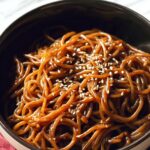
Hibachi Noodles with Sesame and Ginger Recipe
- Prep Time: 15 minutes
- Cook Time: 20 minutes
- Total Time: 35 minutes
- Yield: 4 servings
- Category: Main Course
- Method: Frying
- Cuisine: Japanese
- Diet: Low Sodium
Description
A flavorful and easy-to-make Hibachi Noodles recipe featuring a savory sauce made with soy sauce, sesame oil, garlic, and ginger, tossed with perfectly cooked noodles and garnished with toasted sesame seeds.
Ingredients
Noodles
- 1 lb yakisoba, lo mein, or spaghetti
Sauce
- ½ cup low-sodium soy sauce
- 1 tablespoon sesame oil
- 2 tablespoons packed light brown sugar
- 1 tablespoon minced garlic
- 1 tablespoon minced ginger
For Cooking and Garnish
- 2 tablespoons unsalted butter
- 1 tablespoon toasted sesame seeds (for garnish)
Instructions
- Prepare Noodles: Cook the noodles or pasta just until al dente, with a slight bite remaining. Drain thoroughly and set aside to prevent overcooking during the stir-fry process.
- Make the Sauce: In a bowl, whisk together the low-sodium soy sauce, sesame oil, light brown sugar, minced garlic, and minced ginger until well combined and the sugar has dissolved.
- Sauté Noodles: Heat a large nonstick skillet over medium-high heat and add the unsalted butter. Once melted, add the cooked noodles to the skillet and cook them, stirring occasionally, until they develop a slight golden color and a bit of texture, about 3 to 5 minutes.
- Toss with Sauce: Pour the prepared sauce over the noodles in the skillet. Toss and stir thoroughly to coat all noodles evenly. Continue cooking for an additional 2 to 3 minutes to allow the sauce to meld with the noodles and develop deeper flavor.
- Garnish and Serve: Remove from heat and garnish the hibachi noodles with toasted sesame seeds. Serve hot and enjoy the dish immediately.
Notes
- If yakisoba or lo mein noodles are unavailable, spaghetti is a suitable substitute.
- For added protein, consider adding cooked shrimp, chicken, or tofu during the sauté step.
- Adjust the amount of ginger and garlic to taste for a stronger or milder flavor profile.
- Use low-sodium soy sauce to keep the salt content moderate.
- Ensure noodles are not overcooked initially to prevent mushiness after stir-frying.
Nutrition
- Serving Size: 1 serving
- Calories: 320 kcal
- Sugar: 7 g
- Sodium: 550 mg
- Fat: 10 g
- Saturated Fat: 3 g
- Unsaturated Fat: 6 g
- Trans Fat: 0 g
- Carbohydrates: 50 g
- Fiber: 3 g
- Protein: 8 g
- Cholesterol: 15 mg




Leave a Reply